
Soccer age group changes for the 2026-2027 season
Important Update: Travel Soccer Age Groups for 2026–27 and beyond
As part of a nationwide update to youth soccer registration rules, travel soccer age groups are changing for the 2026–2027 season. These updates are being made to align with a new national standard set by U.S. Soccer and the national youth soccer organizations. We want to make sure our travel soccer families understand what’s happening, why it’s happening, and what this change means for your player.
What's changing?
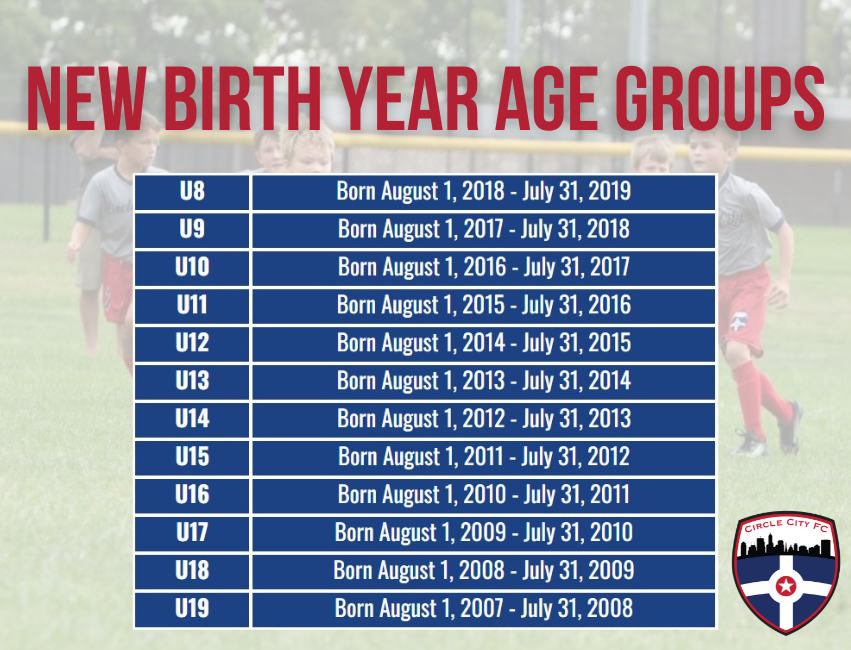
Beginning with the 2026–2027 season, age groups will be formed based on a seasonal year instead of the current calendar year. Specifically:
Current system (through 2025–26): Age groups are based on a January 1 – December 31 birthdate window.
New system (starting 2026–27): Age groups will be based on an August 1 – July 31 birthdate window.
This change affects how players are placed on teams in travel soccer, meaning the age group designation (like U10, U12, etc.) will now be determined by whether a player’s birthdate falls between August 1 and July 31 rather than birth year alone.
This system is sometimes called a school-year age group model because it better aligns with the academic calendar. It is also the current model we use for age divisions in our rec soccer program.
Why is this change happening?
This shift isn’t unique to our club—it’s part of a coordinated decision by the major youth soccer governing bodies in the United States, including US Youth Soccer, US Club Soccer, and AYSO. The change is being made for several important reasons:
✅ Better Alignment with School and Social Groups
The August–July age grouping mirrors the school calendar, so players are more likely to be grouped with teammates from their classroom and peer group.
✅ Reduces “Trapped” Players
Under the calendar-year system, players born early in the year sometimes had developmental or social mismatches compared to their school peers. The new system reduces these mismatches.
✅ Creates a More Natural Progression
Aligning with a school-year model standardizes team formation across clubs and most youth sports, which can help with participation, player retention, and consistent development pathways.
What this means for your player
It is important to remember this age group change does not affect the upcoming Spring 2026 travel season. Your player will compete in their current age group throughout the rest of this season. The new age groups go into effect for the 2026-2027 travel season, beginning Fall 2026.
This does mean some teams may look different, and teammates could shift to new age groups. But across the sport, all clubs are having to follow this new mandate. Coaches and our travel leadership will continue to consider your player's overall development, playing experience, and best competitive fit. Some players may "play up" based on ability and growth, which is still allowed under this new system. These will be considered by coaches and travel leadership.
We will share more details as June tryouts approach and team formations for fall begin later this summer.
Circle city FC and US Youth Soccer Moving Forward Together
Change can be challenging, but aligning age groups with the school calendar helps ensure that players are grouped in ways that support both their development and experience on and off the field. This new model is being adopted nationwide so that clubs, leagues, and competitions across the U.S. are working within the same system, making travel soccer more cohesive and consistent for families everywhere.
If you have questions or need personalized help interpreting how your player might be impacted, please reach out to your coach or to our travel program leadership.
Contact Us






Mailing Address:
Circle City Futbol Club
5351 E. Thompson Rd, #106
Indianapolis, IN 46237
Phone: 317-771-4066
Email: info@circlecityfc.com
Important Links
© 2026 Circle City Futbol Club. All Rights Reserved.

